
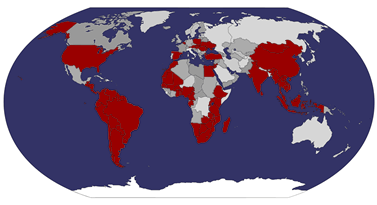
Tara enjoys playing the "which country is best" game, and she often asks which country on our trip has the best food. For the last several months, I have been answering India. Now that we have actually arrived in India, I can confirm that it probably does have the best food of the countries we have visited (though Ethiopia is in the running). Unfortunately for our readers, most Indian food looks basically the same. We will try not to bore you, though.
Despite warnings from lots of people not to eat the street food of India, we made the decision long ago that no fear of illness was going to stop us from trying delicious Indian food. So far, so good. The first morning that we arrived, we went in search of food and found this guy selling balls of something covered in green sauce and disks of something deeply fried. And all in this cute, eco-friendly leaf bowl. Sold! They were really good. The disk had some potato and spice inside. The balls had some spice, but no idea what they were. A spice mint chutney on top. We bought some more. A bit steep at 20 cents per bowl, but probably tourist pricing for us.
 Walking along the street made me hungry and the first thing I saw was someone selling rice with a chickpea dish. It wasn't very good, but could have been worse. After all, I didn't die from eating it.
 Samosas! Samosas are everywhere along the streets of India. They vary from 6 to 12 cents each and always come with a tasty sauce, although the sauce is completely different at every place. It could be anything from a cold, sweet red sauce to a warm, spice curry. At this place, they were straight out of the fryer and came with both a sweet red sauce and a spicy mint sauce. Very good.
 We have always been told by our Indian friends that sweets in India are much better than Indian sweets in the US. They are right--the sweets here are really good and are at best mediocre in the US, even when they are supposed to be the same dishes. They are pricey here compared to other food, though. Here I am with a small bowl of halwa, which has carrots, fruit, butter, and an assortment of spices. It is really good. At about 50 cents per small bowl, it costs as much as six samosas, though.
 Our first night in Delhi, we went to a famous restaurant called Moti Mahal. Their most famous dish is the tandori butter chicken, with the buttery curry sauce so famous that they sell it separately if you want some extra. Dinner was almost $15, which is a lot for India, but it had enough butter to fuel us for days! And it was really good.
 Our guidebook referred to "fried squiggles" as a popular street food. Here I am eating some. These were some of the best and cheapest of the many we have eaten--a dirty old man was taking them straight out of the fryer, throwing them in a vat of syrup, then lifting them out and putting them on some newspaper for me. Terrific! So sweet and crispy.
 Walking along one morning, I saw many people standing around a stand eating something. So, I ordered one. I got a piece of bread filled with a slightly spicy mixture of onions and tomato, and a bowl of dal (lentils with spices). Tara, who was reluctant at first due to her perceived filth of the stand, ended up eating a couple of them after trying mine. We went to pay for the four we had eaten and it was about 20 cents (we hadn't known how much when ordering, which is rare for us, but given the number of street kids eating there, we figured it couldn't be much). Hooray for cheap street eats!
 Sweet shops abound and most of them look something like this. We still have no idea what most of them are, so we will walk into a shop, ask for one piece of about three different things, then try them all. Almost all have been edible, and most have been really good. It is very popular to coat sweets in India with a thin coat of silver or gold leaf, which is edible. We still haven't gotten over eating a coating of silver on our sweets.
 One of the best parts of the Golden Temple in Amritsar is the communal kitchen. Food is free for anyone and the idea is that everyone, no matter the background, eats together. So, they hand you a plate and spoon, show you to the floor, where people come around with huge buckets and ladle some onto your plate. We thought the food would be basic and not great. It turned out to be absolutely amazing. Some of the best food we have had in India, and it was free! (Small donation given.)
 Many people donate time to the Golden Temple to help prepare the food. Here are women peeling garlic. About 20 women working full time to peel enough garlic to feed the 60,000 people per day who eat there.
 This is what the plate looked like with some food. A sweet coconut dish, a delicious dal, and a chickpea dish. They bring around tons of chapatis (small flat breads) to go with the food. And you can have as much as you want! We will forever love Sikhs.
 For dinner that night, we got hungry before we made it to the restaurant, so we stopped at what might have been the dingiest place in town and had a stuffed paratha with a chickpea curry. It was pretty good, and nicely fried and buttered. Tara was really afraid that we would get sick, but our stomachs are too strong for that.
 We did make it to dinner at one of the famous local fast food places called Brothers. It was packed with locals. Tara ordered the thali (little dishes of many different things), and I ordered a mushroom dish of some kind. Here is what showed up. Mine was a bit bland, but Tara's was quite good.
 At many nice restaurants (and some less nice), they bring you a bowl of sugar and fennel seeds (which taste like black licorice), just as some Indian restaurants in the US. Tara especially liked these colorful sugar coated seeds.
 The next day, we went back to eat at the Golden Temple. They had a completely different menu, but the food was just as wonderful. Inspired by a blog post from our friends Ben and Megan, we went to visit the kitchen. This man showed me how to serve the dal, which takes four hours to cook.
 You can barely see me behind the steam, but this lets you see how massive the cooking pots are and the fire that cooks the food. I am thinking about having some cooking pots like this installed in our future home.
 Nearby was an equally giant pot of rice pudding that was almost done cooling. From these pots, they transfer it to pots of about 50 gallons that they carry to the kitchen, then put in the pails for scooping. Quite the operation.
 The Golden Temple also sells Coke products at cost. In India, Coke makes a mango-nectar-like drink called Maaza. Here is Tara in love with her first Maaza.
 I had to try the Thums Up because we had never heard of it before. It taste like Coke trying to make Pepsi. Not bad, but sort of strange that Coke here makes a second cola product.
 In Varanasi, a guy had a shallow fryer/griller device with balls of potato stuff around the edges, so I had to try one. To my surprise, he fry-grilled the potato, then added about 100 things to it. From sauces to crushed, fried noodles, it had it all. Very good.
 Here is one of our sweet samplings. The darker, wetter ones are gulab jamun, which we often have in the US. Mushy balls doused in syrup. The lighter ones seemed to be a mixture of sugar and sand (possibly with some added sawdust), and are apparently popular as a desert dessert where not much water exists. Not terrific, but better than plain sand.
 Here is the guy making the potato thing from a couple of pictures ago. Look at that concentration on my food! What skill!
 Now we start to get to dishes that look a lot alike. I honestly don't even know what both of these are, but they are some kind of Indian food. And I'm sure that they tasted great.
 Well, that wraps up Indian food for the first week of our travels. Lots more to come! Now we suggest that you go to your nearest Indian restaurant and have some food.
Despite warnings from lots of people not to eat the street food of India, we made the decision long ago that no fear of illness was going to stop us from trying delicious Indian food. So far, so good. The first morning that we arrived, we went in search of food and found this guy selling balls of something covered in green sauce and disks of something deeply fried. And all in this cute, eco-friendly leaf bowl. Sold! They were really good. The disk had some potato and spice inside. The balls had some spice, but no idea what they were. A spice mint chutney on top. We bought some more. A bit steep at 20 cents per bowl, but probably tourist pricing for us.
Walking along the street made me hungry and the first thing I saw was someone selling rice with a chickpea dish. It wasn't very good, but could have been worse. After all, I didn't die from eating it.Samosas! Samosas are everywhere along the streets of India. They vary from 6 to 12 cents each and always come with a tasty sauce, although the sauce is completely different at every place. It could be anything from a cold, sweet red sauce to a warm, spice curry. At this place, they were straight out of the fryer and came with both a sweet red sauce and a spicy mint sauce. Very good.We have always been told by our Indian friends that sweets in India are much better than Indian sweets in the US. They are right--the sweets here are really good and are at best mediocre in the US, even when they are supposed to be the same dishes. They are pricey here compared to other food, though. Here I am with a small bowl of halwa, which has carrots, fruit, butter, and an assortment of spices. It is really good. At about 50 cents per small bowl, it costs as much as six samosas, though.Our first night in Delhi, we went to a famous restaurant called Moti Mahal. Their most famous dish is the tandori butter chicken, with the buttery curry sauce so famous that they sell it separately if you want some extra. Dinner was almost $15, which is a lot for India, but it had enough butter to fuel us for days! And it was really good.Our guidebook referred to "fried squiggles" as a popular street food. Here I am eating some. These were some of the best and cheapest of the many we have eaten--a dirty old man was taking them straight out of the fryer, throwing them in a vat of syrup, then lifting them out and putting them on some newspaper for me. Terrific! So sweet and crispy.Walking along one morning, I saw many people standing around a stand eating something. So, I ordered one. I got a piece of bread filled with a slightly spicy mixture of onions and tomato, and a bowl of dal (lentils with spices). Tara, who was reluctant at first due to her perceived filth of the stand, ended up eating a couple of them after trying mine. We went to pay for the four we had eaten and it was about 20 cents (we hadn't known how much when ordering, which is rare for us, but given the number of street kids eating there, we figured it couldn't be much). Hooray for cheap street eats!Sweet shops abound and most of them look something like this. We still have no idea what most of them are, so we will walk into a shop, ask for one piece of about three different things, then try them all. Almost all have been edible, and most have been really good. It is very popular to coat sweets in India with a thin coat of silver or gold leaf, which is edible. We still haven't gotten over eating a coating of silver on our sweets.One of the best parts of the Golden Temple in Amritsar is the communal kitchen. Food is free for anyone and the idea is that everyone, no matter the background, eats together. So, they hand you a plate and spoon, show you to the floor, where people come around with huge buckets and ladle some onto your plate. We thought the food would be basic and not great. It turned out to be absolutely amazing. Some of the best food we have had in India, and it was free! (Small donation given.)Many people donate time to the Golden Temple to help prepare the food. Here are women peeling garlic. About 20 women working full time to peel enough garlic to feed the 60,000 people per day who eat there.This is what the plate looked like with some food. A sweet coconut dish, a delicious dal, and a chickpea dish. They bring around tons of chapatis (small flat breads) to go with the food. And you can have as much as you want! We will forever love Sikhs.For dinner that night, we got hungry before we made it to the restaurant, so we stopped at what might have been the dingiest place in town and had a stuffed paratha with a chickpea curry. It was pretty good, and nicely fried and buttered. Tara was really afraid that we would get sick, but our stomachs are too strong for that.We did make it to dinner at one of the famous local fast food places called Brothers. It was packed with locals. Tara ordered the thali (little dishes of many different things), and I ordered a mushroom dish of some kind. Here is what showed up. Mine was a bit bland, but Tara's was quite good.At many nice restaurants (and some less nice), they bring you a bowl of sugar and fennel seeds (which taste like black licorice), just as some Indian restaurants in the US. Tara especially liked these colorful sugar coated seeds.The next day, we went back to eat at the Golden Temple. They had a completely different menu, but the food was just as wonderful. Inspired by a blog post from our friends Ben and Megan, we went to visit the kitchen. This man showed me how to serve the dal, which takes four hours to cook.You can barely see me behind the steam, but this lets you see how massive the cooking pots are and the fire that cooks the food. I am thinking about having some cooking pots like this installed in our future home.Nearby was an equally giant pot of rice pudding that was almost done cooling. From these pots, they transfer it to pots of about 50 gallons that they carry to the kitchen, then put in the pails for scooping. Quite the operation.The Golden Temple also sells Coke products at cost. In India, Coke makes a mango-nectar-like drink called Maaza. Here is Tara in love with her first Maaza.I had to try the Thums Up because we had never heard of it before. It taste like Coke trying to make Pepsi. Not bad, but sort of strange that Coke here makes a second cola product.In Varanasi, a guy had a shallow fryer/griller device with balls of potato stuff around the edges, so I had to try one. To my surprise, he fry-grilled the potato, then added about 100 things to it. From sauces to crushed, fried noodles, it had it all. Very good.Here is one of our sweet samplings. The darker, wetter ones are gulab jamun, which we often have in the US. Mushy balls doused in syrup. The lighter ones seemed to be a mixture of sugar and sand (possibly with some added sawdust), and are apparently popular as a desert dessert where not much water exists. Not terrific, but better than plain sand.Here is the guy making the potato thing from a couple of pictures ago. Look at that concentration on my food! What skill!Now we start to get to dishes that look a lot alike. I honestly don't even know what both of these are, but they are some kind of Indian food. And I'm sure that they tasted great.Well, that wraps up Indian food for the first week of our travels. Lots more to come! Now we suggest that you go to your nearest Indian restaurant and have some food.


