

Okay, we have some questions in the queue and I got some more today, so here it goes:
Q: How much of a difference is there in the Spanish from country to country? Are the idioms and accents pretty similar throughout?
A: The Spanish definitely differs from country to country. In Venezuela (and apparently in Colombia from the Colombians we have met), they have removed the letter 's' from the alphabet. Adios becomes adio, for example. These are the hardest accents to understand. In Argentina, the Spanish has almost an Italian accent, which isn't surprising given the country's desire to be European. Chile has a tough accent as well (a Peruvian guide actually told me that she can barely understand people from Chile). Peru, Bolivia, and Ecuador have accents more like Americans learn in Spanish class. As to idioms, our Spanish really isn't that good. They definitely exist, but we don't understand any of them.
Q: Wait, so those line pictures (in Nasca) *aren't* carved into rock? No way! It's amazing they haven't washed away in the rain. How big are they?
A: No, they aren't carved into the rock. Just dug down in the top layer of small rocks to a depth of upto about a foot. The drawings in the picture on the blog are some of the smaller ones and are maybe 500 feet long. Some of the larger ones are up to about a half mile across.
Q: So, I see all the street food you are eating. Are you getting fat from the food or skinny because you aren't eating much?
A: We definitely eat our fair share of unhealthy street food, but we also do a lot of hiking and often don't eat at real restaurants to save money. So, I think we are staying about the same, though it is safe to say that our diet is not as healthy as when we were in the US. Bolivia, despite its theft problem, was the only country where they routinely gave salad or vegetables with any street food.
Q: Do you ever get a good night's sleep? What time do you normally sleep to?
A: We take a ton of night buses, and it is difficult to get a good night's sleep, though we have gotten better at it. I would say that we get a good night's sleep about half the time. However, we do get up early a lot because the sun comes up around 6 and goes down around 6 and we try to take advantage of the light when we aren't in a big city. In the cities, we sleep until around 8am on average, but are up earlier when doing outdoors trips.
Q: Are you sick of being together 24/7? Do you ever get anytime to yourself?
A: Depends on the day. We definitely have days when we are completely sick of one another. The odds of it being such a day goes up dramatically if it is a day when we are both tired from traveling a long distance or hiking a lot. We're still happily married for now, though. We sometimes go our separate ways for a few hours when we are in cities, but not all that often.
Q: How does your budget look? You sticking to it?
A: We are doing fairly well in terms of budget. We need to publish a financial update, but our costs have actually been lower in our last few countries. We should be about where we expected or a little lower for the South American portion of the trip.
Countries Visited
Showing posts with label questions. Show all posts
Showing posts with label questions. Show all posts
Saturday, November 7, 2009


Tuesday, September 22, 2009
More Questions
The questions just keep rolling in, even if about 90% are from one reader. Here is a sampling?
Q: What do you do without dressy clothes for the fancy performances?
A: It is true that we have nothing dressier than our zip-on pants and long sleeve t-shirts. We often look underdressed, but have not yet been thrown out. Some of the venues have had a no sandal policy, but sneakers seem to be fine. We won't be going to any black-tie events, and I doubt that we could get into many clubs, but we seem to be fine for cultural performances.
Q: How big are the maras (the giant guinea pig things)?
A: They are the size of a medium size dog and bigger than a cat. They probably weigh about 25 pounds. More information is available here.
Q: "That picture of the Welsh home looked like it was taken through Alice's Looking Glass! Is it for midgets?"
A: Once inside, it is actually tall enough to stand in comfortably, but I had to duck to go through doorways. People were a bit shorter then, but I think the first people there probably were not professional carpenters and did the best that they could.
Q: How come most of the Welsh settlers went to Canada?
A: The came to Argentina so that they could live how they wanted without being bothered by the government. Eventually, technology meant that the government of Argentina tried to start imposing laws and rule on them as well, so most of them then left for Canada.
Q: Did people speak English in the Welsh tea house?
A: Some, but many people in Argentina speak English. The Welsh villages didn't actually speak that much English--mostly Welsh. You can still find some people around who speak Welsh and some signs, but everyone learns Spanish as their first language.
Q: What is Agosto on that sign picture that Tara posted?
A: Yeah, I wouldn't know if I wasn't married to a playwright. August: Osage County is a broadway play that Tara loves and that has been a critical success in New York. If you don't live in New York, you have probably never heard of it.
Q: What exactly is mate?
A: It is a plant and they use the leaves to brew this crazy tea.
Q: Do the two of you ever fight?
A: Just about everyday. Mostly when we are lost, because one of us wants to buy something that the other does not, or because one of us wants to go somewhere that the other one does not. Most of these fights are short and we have no lasting problems. I have traveled with a lot of people and the fights were exactly the same, so it has little to do with the two of us...
Q: What do you do without dressy clothes for the fancy performances?
A: It is true that we have nothing dressier than our zip-on pants and long sleeve t-shirts. We often look underdressed, but have not yet been thrown out. Some of the venues have had a no sandal policy, but sneakers seem to be fine. We won't be going to any black-tie events, and I doubt that we could get into many clubs, but we seem to be fine for cultural performances.
Q: How big are the maras (the giant guinea pig things)?
A: They are the size of a medium size dog and bigger than a cat. They probably weigh about 25 pounds. More information is available here.
Q: "That picture of the Welsh home looked like it was taken through Alice's Looking Glass! Is it for midgets?"
A: Once inside, it is actually tall enough to stand in comfortably, but I had to duck to go through doorways. People were a bit shorter then, but I think the first people there probably were not professional carpenters and did the best that they could.
Q: How come most of the Welsh settlers went to Canada?
A: The came to Argentina so that they could live how they wanted without being bothered by the government. Eventually, technology meant that the government of Argentina tried to start imposing laws and rule on them as well, so most of them then left for Canada.
Q: Did people speak English in the Welsh tea house?
A: Some, but many people in Argentina speak English. The Welsh villages didn't actually speak that much English--mostly Welsh. You can still find some people around who speak Welsh and some signs, but everyone learns Spanish as their first language.
Q: What is Agosto on that sign picture that Tara posted?
A: Yeah, I wouldn't know if I wasn't married to a playwright. August: Osage County is a broadway play that Tara loves and that has been a critical success in New York. If you don't live in New York, you have probably never heard of it.
Q: What exactly is mate?
A: It is a plant and they use the leaves to brew this crazy tea.
Q: Do the two of you ever fight?
A: Just about everyday. Mostly when we are lost, because one of us wants to buy something that the other does not, or because one of us wants to go somewhere that the other one does not. Most of these fights are short and we have no lasting problems. I have traveled with a lot of people and the fights were exactly the same, so it has little to do with the two of us...
Friday, September 4, 2009
More questions from readers like you
We have gotten some good questions lately. Here is a sampling:
Q: What is the weather like? (submitted by multiple readers)
A: The weather for the first month and a half of our trip was similar because we were close to the equator. It was generally a high of 90 to 95 degrees and fell to between 70 and 75 degrees at night. In the last few days, it has become more variable. Starting in Rio, it was about 10 degrees cooler. Then, in Sao Paolo, we arrived at 5am and it was about 50 degrees. Tara just about froze. It will now get colder as we go South, though it is now going into Spring since seasons in the Southern Hempisphere are the opposite of the Northern Hemisphere. In a few weeks, we'll be in snow and it will be cold...
Q: Are you now in really good shape after all your travels? (submitted by BD)
A: Are you implying that we weren't in really good shape before? I would say we are in about the same shape. We do walk/hike a lot and we often travel with 30 pound packs on our backs, but we also eat a ton and spend a lot of time just sitting on buses. We weighed ourselves on the free scale at a supermarket the other day, and we are about the same weights as when we left.
Q: Can Andy stop shaving and getting hair cuts? (submitted most recently by AJ)
A: This is a surprisingly common request. No, I fully plan to continue shaving and getting hair cuts. As much as I like the hippie look, I will leave it to my parents' generation.
Q: What is the best place you have been? (also submitted by multiple people)
A: That is like asking which child is a parent's favorite. Even if they have one, they won't tell you. We really liked the Gran Sabana in Venezuela, the forests of Suriname, the sand dunes in Brazil, and Iguacu Falls so far. I'm sure that there will be many more.
Monday, August 17, 2009
Questions
One of our loyal readers, whom we will call AJ, asked the following a while ago and we're just getting around to answering (paraphrased): 1)Do we carry a suitcase full of cash with us? 2) Do we have to buy bottled water everywhere? and 3) Why did we choose to go north through Guyana rather than starting in Georgetown and going south?
All great questions. We did bring a lot of cash, mostly because of the Venezuela black market situation. Between the two of us, we had about 1200 dollars, mostly in Pacsafe money belts. These are normal nylon belts with a zippered compartment down the back. Unlike a normal moneybelt, it is nearly impossible to notice anything extra. We did not think that finding ATMs in most countries would be a problem, but that has not always been true. Entering Guyana, we found no ATMs until Georgetown and really depleted our cash. In Suriname, they had ATMs, but almost none took Visa (it is not where we wanted to be) and most of the ATMs were out of cash. In hindsight, we probably should have brought more cash.
We filter all our water with the filter that we brought. At first, this worked really well. The filter clogged after about 30 gallons rather than the promised 150 though and is now very slow. We are hoping the second filter is better. If not, we will reevaluate carrying a filter, but we hate having to rely on finding stores and then wasting all the plastic bottles (that normally end up in the river in South America).
The choice of routes through South America was determined in part through roads and borders. Guyana and Venezuela don't like one another because of a territory dispute, so you can't go from Venezuela to Guyana.
All great questions. We did bring a lot of cash, mostly because of the Venezuela black market situation. Between the two of us, we had about 1200 dollars, mostly in Pacsafe money belts. These are normal nylon belts with a zippered compartment down the back. Unlike a normal moneybelt, it is nearly impossible to notice anything extra. We did not think that finding ATMs in most countries would be a problem, but that has not always been true. Entering Guyana, we found no ATMs until Georgetown and really depleted our cash. In Suriname, they had ATMs, but almost none took Visa (it is not where we wanted to be) and most of the ATMs were out of cash. In hindsight, we probably should have brought more cash.
We filter all our water with the filter that we brought. At first, this worked really well. The filter clogged after about 30 gallons rather than the promised 150 though and is now very slow. We are hoping the second filter is better. If not, we will reevaluate carrying a filter, but we hate having to rely on finding stores and then wasting all the plastic bottles (that normally end up in the river in South America).
The choice of routes through South America was determined in part through roads and borders. Guyana and Venezuela don't like one another because of a territory dispute, so you can't go from Venezuela to Guyana.
Tuesday, June 30, 2009
You got rid of everything?
For the last week, the question all of our close friends have asked is how much stuff we have left. Many people have asked what we're doing with all of our stuff. The short answer is that we have sold or given away everything we own except for a few boxes of personal effects each of us is keeping with our parents. Don't get me wrong--even those personal items (mostly clothes, photos, and random gifts from over the years) amount to more than it seems like we need. However, as of a few hours ago, we have no furniture, no electronics (other than our cameras), no dishes, no appliances, and no home.
We got rid of about 95% of everything we owned. We managed to sell most of it, but also gave a good amount away today. We tried a take what you want, give what you want house sale, which had mixed results. I cursed a few people as they left for their cheapness and I actually talked one girl down and told her she couldn't give us that much money for the amount she was taking. Tara posted weeks of Craigslist ads to sell tons of stuff. We donated somewhere around 15 trash bags of clothes. Overall, we think we made about $2000 from selling stuff, which will hopefully fund another month of travel.
So, we leave in 8 hours for Trinidad & Tobago with just the gear we talked about earlier. We'll hope that you'll come along with us for our trip.
We got rid of about 95% of everything we owned. We managed to sell most of it, but also gave a good amount away today. We tried a take what you want, give what you want house sale, which had mixed results. I cursed a few people as they left for their cheapness and I actually talked one girl down and told her she couldn't give us that much money for the amount she was taking. Tara posted weeks of Craigslist ads to sell tons of stuff. We donated somewhere around 15 trash bags of clothes. Overall, we think we made about $2000 from selling stuff, which will hopefully fund another month of travel.
So, we leave in 8 hours for Trinidad & Tobago with just the gear we talked about earlier. We'll hope that you'll come along with us for our trip.
Monday, June 22, 2009
Gear, Part Dos
While Andy has been busy adding terrific new posts to this blog, I have been off mini-golfing, eating Duckfat fries and Beals ice cream, and, most importantly, road-testing some of my new travel gear in Maine!
(Side note: You can find Andy's gear list and reviews in "Gear: Part I.")
I have pretty much the same gear as Andy does, but there are a few differences. I'll follow Andy's format of listing largest to smallest (though note that my size order is different!), and try to comment on how I'm enjoying things that I've been able to try out so far.
Backpack: Women's Eagle Creek Explorer LT 45L pack with detachable 20L daypack ($230). Seems to fit all my stuff nicely and is still within carry-on size limits. Great sturdy waist strap. I don't love the orange color I ended up with, but as Andy mentioned, this model was discontinued, so I'm just glad I got one at all.
Sleeping bag: Lafuma 650X Pro ($70). Same as Andy's. A little bulkier than we expected, but very lightweight. Usefulness TBD.
Pillow: Thermarest Medium Compressible Pillow ($23). I'm not really convinced yet that this thing will be worth the space it takes up in my bag. It doesn't stuff down that small and seems to take a while to fluff up after being unstuffed. But Andy seems really psyched about his, so I hope I'm wrong.
Fleece: REI Woodland Fleece (~$40), made of 85% recycled polyester. My first fleece ever. I've been wearing it all weekend in chilly Maine and love it so far--super-comfy and warm. Not really windproof, but that's what my jacket is for...
Jacket: Columbia Storm Dry breathable, packable jacket. Got this a few years ago and it's held up nicely through multiple rainforesty trips (Costa Rica, Hawaii, Borneo). Keeps me dry, has zipper pockets and stuffs into itself for easy storage. Pretty sure I got it on sale for less than $40.
Pants: 2 pairs of The North Face Paramount Porter Convertible Pants ($65 apiece); 1 pair waterproof lined nylon pants (already had, probably cost $20 or so).
I tried on a lot of convertibles, and basically went with North Face because 1) their petite length pant legs seemed to be the shortest, 2) their shorts inseam was by far the shortest (6 inches when many other brands are 10 inches), and 3) they have an extra button that allows you to wear the pants at a third, capri, length.
Pathetically, I may still need to hem the full pants leg a little (I'm 5'2") so it's also good that these don't have boot zippers (my hangup with the EMS brand, which was my second favorite). I got one pair a little wet in the ocean this weekend and they dried very quickly. They're also very lightweight on. The only thing I don't love so far is that none of the pockets have zippers.
I'll also take a pair of stuffable waterproof pants that I bought a few trips ago and that have been very handy in the rainforest trips I mentioned above.
Water bottles: 2 1L Sigg lifestyle loop bottles. Andy went with the Nalgenes, but I stuck with Siggies. I've had a smaller Sigg for a while now and it keeps my water cool and clean-tasting with very infrequent cleanings. I am also confident that my bottles will be less leaky than Andy's. The water-bottle war is on!
Shirts: 1 long-sleeved Icebreaker 260 Olympia zip ($25 on crazy sale); 2 short-sleeved Icebreaker Superfine140 Flight T Lite t-shirts (~35-$50 apiece); 1 Icebreaker Superfine 190 Cross Cami with built-in bra (~$30), all 100% merino wool.
These seem awesome so far. I've been wearing one of my 140 t-shirts almost daily for about a week now, and it does not smell at all. It itched a little when I first tried it on, but after one washing and one day of wear, it has not itched a bit since and has been super-soft and comfortable.
The long-sleeved zip shirt has thumb holes and a neck that can zip all the way up for warmth or all the way down if I get hot. I wore it one night over the 140 shirt and it kept me toasty. These shirts also take up next to no room in my backpack.
Water filtration system: See Andy's description. I'm carrying the spare filter, which is a bit lighter than the actual apparatus.
Shoes: New Balance WT1110 GT Waterproof Trailrunning shoes ($100); 1 pair Columbia sandals (already had, less than $20 on sale).
The New Balance Gore-Tex shoes are awesome so far--super-comfy right out of the box, and very waterproof in my recent testings in the NY monsoon. (I've also done a few runs in them, much to Andy's chagrin, as he thinks I should be saving their soles for the trip!)
The Columbias can be worn in the water and were really cheap; if they wear out too much along the way I may need to replace them.
Cameras: See Andy's review. I'll be carrying the smaller waterproof one.
Socks: 1 pair Smartwool hiking socks ($18); 2 pairs SmartWool PhD Outdoor Light Mini Socks ($17 each); 2 pairs SmartWool PhD Running Ultra Light Micro Socks ($13 each).
I also got more socks than I originally planned, oh well. I've been wearing the light minis around and they are super-cushy and comfy, and though they're a little warmer than I'd anticipated, my feet didn't get all sweaty in them and they didn't smell bad, even after several days. But I got worried about hot feet in the tropics, so I also got the ultra lights/micros, which are lighter weight and shorter, though still cushioned. Haven't tried those yet. The light pair I did wear around seemed to shed a little, so these socks may wear out faster than some of our other clothes.
I also followed the comments I read online and ordered one size down from my normal size (I'm a 7-7.5 in shoes, which means I should get a medium Smartwool sock, but I got smalls instead.) The socks I got all fit great, so this seems to be solid advice.
Bag cover: Came with the bag. Takes up space in the bag. But may protect the bag from monsoon. We'll see.
Hat/gloves: Generic wool hat (likely ancient, was my dad's); baseball cap (go Mets!); 1 pair Outdoor Research Windstopper Gripper Gloves ($45).
Like Andy, was looking for windproof/waterproof gloves. Tried these on the advice of a salesman at Campmor and liked them. Bonus: They came not only in black, but in pale blue...but only if I ordered a medium. I probably should be wearing a small, but the blue was so nice...so guess which size I got? We'll see if this choice bites me in the ass, I mean butt, I mean thumb, at the top of the Andes...
Underwear: 5 pairs Ex Officio Soy Seamless Bikini underpants (in black, coral, and spearmint, $10 a pair on sale); 3 Ex Officio Soytopia Seamless Tank Bras (2 spearmint, 1 black, ~$15 per bra); 1 pair REI Silk Bottoms (long underwear, petite length, $30).
Yes, my underwear is made of soy, which means that if Andy and I are starving, we can boil it into a tasty soup. Kidding! They're only 77% soy, seasoned with some nylon and Lycra. But that still makes them pretty eco-friendly, and so far, REALLY comfortable. I've been wearing one of the bras for about a week straight and love it, and the undies I tried for a day were great, too. The black color seems to fit a little tighter than the other ones.
I washed and hang-dried these and they didn't dry as fast as my Icebreaker stuff, but we'll see how they do when rung out with a towel first like the instructions suggest.
I probably didn't need this much underwear, but they take up hardly any space in my bag.
The REI silk bottoms pack down tiny, seem really warm, and were the best price for pure silk long johns.
Towel: REI Large Multitowel ($8). See Andy's review. Haven't tried this out yet.
Bathing suit: 1 super-old blue one-piece I've had since high school. Though I may buy my first-ever bikini on the trip...we'll see how cheap they are and how buff I am feeling.
Other stuff: Black Diamond Spot LED Headlamp Headlamp ($40)--seems comfy, easy to use, and has great lighting features; binoculars (a bit bigger and better than Andy's tiny ones, were a Christmas gift from him); a Rite-In-The-Rain Notebook ($15), pen ($10) and mini spiral memo pad ($4) for waterproof journaling and note-taking; various toiletries, including 2 LUSH solid shampoos ($8-$10 apiece), Soak and Float (awesome for dry scalp) and Squeaky Green (eco-friendly and also scalp-soothing)--I've been using these for a year and love them, they last forever and are so easy to carry around; Sea to Summit Titanium Spork ($7); Eagle Creek TSA approved combination lock ($6); Sandisk Sansa Clip 4GB mp3 player ($35 used on Craigslist--love it so far, as it's tiny, clips onto my clothes, and plays FM radio in addition to mp3s!), games--waterproof playing cards (rummy!!) and possibly a Boggle set if we can fit it; plus all the misc. stuff Andy mentioned and other things I'm sure I'm forgetting.
Questions? Comments? Suggestions? Time left for getting more gear before departure is short, so say your piece now!
(Side note: You can find Andy's gear list and reviews in "Gear: Part I.")
I have pretty much the same gear as Andy does, but there are a few differences. I'll follow Andy's format of listing largest to smallest (though note that my size order is different!), and try to comment on how I'm enjoying things that I've been able to try out so far.
Backpack: Women's Eagle Creek Explorer LT 45L pack with detachable 20L daypack ($230). Seems to fit all my stuff nicely and is still within carry-on size limits. Great sturdy waist strap. I don't love the orange color I ended up with, but as Andy mentioned, this model was discontinued, so I'm just glad I got one at all.
Sleeping bag: Lafuma 650X Pro ($70). Same as Andy's. A little bulkier than we expected, but very lightweight. Usefulness TBD.
Pillow: Thermarest Medium Compressible Pillow ($23). I'm not really convinced yet that this thing will be worth the space it takes up in my bag. It doesn't stuff down that small and seems to take a while to fluff up after being unstuffed. But Andy seems really psyched about his, so I hope I'm wrong.
Fleece: REI Woodland Fleece (~$40), made of 85% recycled polyester. My first fleece ever. I've been wearing it all weekend in chilly Maine and love it so far--super-comfy and warm. Not really windproof, but that's what my jacket is for...
Jacket: Columbia Storm Dry breathable, packable jacket. Got this a few years ago and it's held up nicely through multiple rainforesty trips (Costa Rica, Hawaii, Borneo). Keeps me dry, has zipper pockets and stuffs into itself for easy storage. Pretty sure I got it on sale for less than $40.
Pants: 2 pairs of The North Face Paramount Porter Convertible Pants ($65 apiece); 1 pair waterproof lined nylon pants (already had, probably cost $20 or so).
I tried on a lot of convertibles, and basically went with North Face because 1) their petite length pant legs seemed to be the shortest, 2) their shorts inseam was by far the shortest (6 inches when many other brands are 10 inches), and 3) they have an extra button that allows you to wear the pants at a third, capri, length.
Pathetically, I may still need to hem the full pants leg a little (I'm 5'2") so it's also good that these don't have boot zippers (my hangup with the EMS brand, which was my second favorite). I got one pair a little wet in the ocean this weekend and they dried very quickly. They're also very lightweight on. The only thing I don't love so far is that none of the pockets have zippers.
I'll also take a pair of stuffable waterproof pants that I bought a few trips ago and that have been very handy in the rainforest trips I mentioned above.
Water bottles: 2 1L Sigg lifestyle loop bottles. Andy went with the Nalgenes, but I stuck with Siggies. I've had a smaller Sigg for a while now and it keeps my water cool and clean-tasting with very infrequent cleanings. I am also confident that my bottles will be less leaky than Andy's. The water-bottle war is on!
Shirts: 1 long-sleeved Icebreaker 260 Olympia zip ($25 on crazy sale); 2 short-sleeved Icebreaker Superfine140 Flight T Lite t-shirts (~35-$50 apiece); 1 Icebreaker Superfine 190 Cross Cami with built-in bra (~$30), all 100% merino wool.
These seem awesome so far. I've been wearing one of my 140 t-shirts almost daily for about a week now, and it does not smell at all. It itched a little when I first tried it on, but after one washing and one day of wear, it has not itched a bit since and has been super-soft and comfortable.
The long-sleeved zip shirt has thumb holes and a neck that can zip all the way up for warmth or all the way down if I get hot. I wore it one night over the 140 shirt and it kept me toasty. These shirts also take up next to no room in my backpack.
Water filtration system: See Andy's description. I'm carrying the spare filter, which is a bit lighter than the actual apparatus.
Shoes: New Balance WT1110 GT Waterproof Trailrunning shoes ($100); 1 pair Columbia sandals (already had, less than $20 on sale).
The New Balance Gore-Tex shoes are awesome so far--super-comfy right out of the box, and very waterproof in my recent testings in the NY monsoon. (I've also done a few runs in them, much to Andy's chagrin, as he thinks I should be saving their soles for the trip!)
The Columbias can be worn in the water and were really cheap; if they wear out too much along the way I may need to replace them.
Cameras: See Andy's review. I'll be carrying the smaller waterproof one.
Socks: 1 pair Smartwool hiking socks ($18); 2 pairs SmartWool PhD Outdoor Light Mini Socks ($17 each); 2 pairs SmartWool PhD Running Ultra Light Micro Socks ($13 each).
I also got more socks than I originally planned, oh well. I've been wearing the light minis around and they are super-cushy and comfy, and though they're a little warmer than I'd anticipated, my feet didn't get all sweaty in them and they didn't smell bad, even after several days. But I got worried about hot feet in the tropics, so I also got the ultra lights/micros, which are lighter weight and shorter, though still cushioned. Haven't tried those yet. The light pair I did wear around seemed to shed a little, so these socks may wear out faster than some of our other clothes.
I also followed the comments I read online and ordered one size down from my normal size (I'm a 7-7.5 in shoes, which means I should get a medium Smartwool sock, but I got smalls instead.) The socks I got all fit great, so this seems to be solid advice.
Bag cover: Came with the bag. Takes up space in the bag. But may protect the bag from monsoon. We'll see.
Hat/gloves: Generic wool hat (likely ancient, was my dad's); baseball cap (go Mets!); 1 pair Outdoor Research Windstopper Gripper Gloves ($45).
Like Andy, was looking for windproof/waterproof gloves. Tried these on the advice of a salesman at Campmor and liked them. Bonus: They came not only in black, but in pale blue...but only if I ordered a medium. I probably should be wearing a small, but the blue was so nice...so guess which size I got? We'll see if this choice bites me in the ass, I mean butt, I mean thumb, at the top of the Andes...
Underwear: 5 pairs Ex Officio Soy Seamless Bikini underpants (in black, coral, and spearmint, $10 a pair on sale); 3 Ex Officio Soytopia Seamless Tank Bras (2 spearmint, 1 black, ~$15 per bra); 1 pair REI Silk Bottoms (long underwear, petite length, $30).
Yes, my underwear is made of soy, which means that if Andy and I are starving, we can boil it into a tasty soup. Kidding! They're only 77% soy, seasoned with some nylon and Lycra. But that still makes them pretty eco-friendly, and so far, REALLY comfortable. I've been wearing one of the bras for about a week straight and love it, and the undies I tried for a day were great, too. The black color seems to fit a little tighter than the other ones.
I washed and hang-dried these and they didn't dry as fast as my Icebreaker stuff, but we'll see how they do when rung out with a towel first like the instructions suggest.
I probably didn't need this much underwear, but they take up hardly any space in my bag.
The REI silk bottoms pack down tiny, seem really warm, and were the best price for pure silk long johns.
Towel: REI Large Multitowel ($8). See Andy's review. Haven't tried this out yet.
Bathing suit: 1 super-old blue one-piece I've had since high school. Though I may buy my first-ever bikini on the trip...we'll see how cheap they are and how buff I am feeling.
Other stuff: Black Diamond Spot LED Headlamp Headlamp ($40)--seems comfy, easy to use, and has great lighting features; binoculars (a bit bigger and better than Andy's tiny ones, were a Christmas gift from him); a Rite-In-The-Rain Notebook ($15), pen ($10) and mini spiral memo pad ($4) for waterproof journaling and note-taking; various toiletries, including 2 LUSH solid shampoos ($8-$10 apiece), Soak and Float (awesome for dry scalp) and Squeaky Green (eco-friendly and also scalp-soothing)--I've been using these for a year and love them, they last forever and are so easy to carry around; Sea to Summit Titanium Spork ($7); Eagle Creek TSA approved combination lock ($6); Sandisk Sansa Clip 4GB mp3 player ($35 used on Craigslist--love it so far, as it's tiny, clips onto my clothes, and plays FM radio in addition to mp3s!), games--waterproof playing cards (rummy!!) and possibly a Boggle set if we can fit it; plus all the misc. stuff Andy mentioned and other things I'm sure I'm forgetting.
Questions? Comments? Suggestions? Time left for getting more gear before departure is short, so say your piece now!
Friday, June 19, 2009
Afraid of needles?
The world is a big place with a lot of disease. Many diseases and infections that are very rare in the US kill thousands or millions in other countries. This post is dedicated to some of those diseases.
A few weeks ago we went to the doctor to get all of our shots up-to-date. The first thing to know is that almost no insurance covers travel shots, so schedule a visit as part of an annual check-up or say that you have a runny nose. Anything that will allow your doctor to bill the visit so that you don't have to pay. We learned this the hard way. The second is that almost no insurance covers most of the shots you need. Nothing you can do about that. Some doctors will have the vaccines in stock and others will need to order them or have you pick them up at the drug store.
Here's the list of major vaccinations: Hepatitis A, Hepatitis B, Measles/Mumps/Rubella, Meningitis, Polio, Tetanus/Diphtheria/Pertussis (TDaP), Varicella (Chickenpox), Typhoid, and Yellow Fever.
Tara and I did typhoid shots last year for another trip, so we were covered for that. Almost all Americans have MMR when they are children. (If you are a parent reading this, please, please have your child vaccinated. It may save your child's life.) Tara and I both had Chickenpox, so we're covered. Most children these days get that shot as a child, though. We also both had Meningitis shots during a college meningitis outbreak. Tara had her Hep A/B series long ago, but I did mine. It was about $200 for the series. We both had yellow fever at about $100/person. My tetanus booster is up-to-date, but Tara had one. As an added plus, it comes with diphtheria and pertussis (whooping cough) boosters, so now I won't have to listen to Tara whoop. That one was about $130.
In addition to vaccines, we're going to spend a lot of time in malaria zones. My insurance amazingly pays for malarone, the drug of choice to take while in malaria zones. It is really expensive, so our doctor suggested filling what insurance would pay for (60 days supply) and buying the rest while traveling. So, that's what we're going to try.
He also prescribed us what might best be described as super-bacitracin to put on any cuts or injuries to stop bacterial infection. Lastly, he gave us a cipro prescription as a broad-spectrum antibiotic if we fall ill.
We have the following over-the-counter medications/supplies: pain relievers (an assortment), anti-diarrheals, Tylenol cold (both nighttime and daytime), lots of dramamine (for motion sickness/anti-naseau), benadryl, cortizone, bacitracin, cough suppressant, lots of bandaids, and sunscreen.
That's just about it. Hopefully enough to keep us healthy, though we'll no doubt get additional medicine on the road as needed.
A few weeks ago we went to the doctor to get all of our shots up-to-date. The first thing to know is that almost no insurance covers travel shots, so schedule a visit as part of an annual check-up or say that you have a runny nose. Anything that will allow your doctor to bill the visit so that you don't have to pay. We learned this the hard way. The second is that almost no insurance covers most of the shots you need. Nothing you can do about that. Some doctors will have the vaccines in stock and others will need to order them or have you pick them up at the drug store.
Here's the list of major vaccinations: Hepatitis A, Hepatitis B, Measles/Mumps/Rubella, Meningitis, Polio, Tetanus/Diphtheria/Pertussis (TDaP), Varicella (Chickenpox), Typhoid, and Yellow Fever.
Tara and I did typhoid shots last year for another trip, so we were covered for that. Almost all Americans have MMR when they are children. (If you are a parent reading this, please, please have your child vaccinated. It may save your child's life.) Tara and I both had Chickenpox, so we're covered. Most children these days get that shot as a child, though. We also both had Meningitis shots during a college meningitis outbreak. Tara had her Hep A/B series long ago, but I did mine. It was about $200 for the series. We both had yellow fever at about $100/person. My tetanus booster is up-to-date, but Tara had one. As an added plus, it comes with diphtheria and pertussis (whooping cough) boosters, so now I won't have to listen to Tara whoop. That one was about $130.
In addition to vaccines, we're going to spend a lot of time in malaria zones. My insurance amazingly pays for malarone, the drug of choice to take while in malaria zones. It is really expensive, so our doctor suggested filling what insurance would pay for (60 days supply) and buying the rest while traveling. So, that's what we're going to try.
He also prescribed us what might best be described as super-bacitracin to put on any cuts or injuries to stop bacterial infection. Lastly, he gave us a cipro prescription as a broad-spectrum antibiotic if we fall ill.
We have the following over-the-counter medications/supplies: pain relievers (an assortment), anti-diarrheals, Tylenol cold (both nighttime and daytime), lots of dramamine (for motion sickness/anti-naseau), benadryl, cortizone, bacitracin, cough suppressant, lots of bandaids, and sunscreen.
That's just about it. Hopefully enough to keep us healthy, though we'll no doubt get additional medicine on the road as needed.
Friday, June 12, 2009
Gear, Part I
Okay, one of the questions we get asked the most is what we are taking. Only since our wedding have we actually had our gear in our possession, so now I feel good about giving my initial thoughts on everything. I'm going to do my gear and a few shared items and ask Tara to do hers.
(Note: You can now find Tara's gear list and reviews in "Gear: Part Dos.")
In order from biggest to smallest with the approximate prices that we paid:
Backpack: Mens' Eagle Creek Explorer LT 45L pack with detachable 20L daypack ($230). We tried on a ton of bags, and I really liked both the fit and size of this bag. It is carry-on size, which was a requirement. Seems great so far. Fits all my stuff perfectly. Unfortunately, they discontinued this bag, so we had to buy them when we realized this. We got ours at Campmor, which still seems to have a few.
Sleeping bag: Lafuma 650X Pro ($70). 5"x10" stuffed, 1.5 lbs. We debated about whether or not to carry sleeping bags, and decided they would be useful. Many people travel with just a sleeping bag liner, but the sleeping bags should be particularly useful on overnight buses and when we find ourselves outdoors or on people's floors. We went with this one because 1.) it is cheap; 2.) it is synthetic (stays warm when wet) while still being small; 3.) they come with left and right zips, so Tara and I can attach to each other and I can have a sleeping bag and a half while she gets a half.
Fleece: REI Woodland Fleece ($40), made of 85% recycled polyester. Cheap and environmentally friendly. I wish it weren't so bulky, but it seems very warm, it's quick-drying, and it's super soft. I don't see much difference between fleeces, but I'll let you know when we're traveling.
Coat: Ex Officio Canopy Trench ($80) with welded seams and teflon coating. It will surprise many people that I'm even taking a coat, since I don't normally wear one. However, I needed a waterproof cover and a layer to keep me warm in the mountains. This should do both. It was also on sale for a great price directly from Ex Offico. When I wear it, I'll refer to myself as the Teflon man.
Pants: 1 pair waterproof, half-lined generic nylon pants ($10); 1 pair Northface Horizon Convertible Pants ($45); 1 pair Orvis Zip-Off Convertible Pants ($80). We stuck primarily with convertibles that can be pants or shorts. They are fast drying nylon, but look much better than standard nylon. The Northface pair is very lightweight. The Orvis pair is a bit thicker and looks really nice in my opinion. A quick note on Orvis: they own Ex Officio, but their own branded stuff is hard to find. I stumbled on these pants in an Orvis store and then ordered them online after confirming that I couldn't get them cheaper anywhere. I really like these pants because they have tons of zipping pockets, which I prefer so that I don't lose things or get pickpocketed. The last pair is my standard pair of traveling pants. They work well in cold, wet environments, so I decided to bring them. They will be the first thing to go if I need more space.
Shirts: 1 longsleeve Icebreaker 260 shirt ($50); 1 shortsleeve Icebreaker 190 t-shirt ($45); 1 shortsleeve Icebreaker 140 t-shirt ($35), all 100% merino wool. These prices may seem crazy compared to a regular t-shirt, but so far I love them. They are soft, super lightweight, and don't smell bad after me wearing it to run errands for a few days. They have a great reputation, so we'll let you know how they hold up. My one complaint so far is that when they wick moisture away, I never thought about where it goes. It turns out it goes to the outside of the shirt. Some of the colors really show the wet spots until it evaporates. Only matters if you care what other people think...
Waterbottles: 2 standard widemouth 1L Nalgene bottles ($6). Not much to say on this one. They hold water, they don't leak.
Water filtration system: First Need XL Water Purifier ($110). Weighs 1 lb. Tara will carry an extra filter ($50) for it, which weighs close to 1lb. I did a lot of research on filtration systems, and this one takes out the smallest particles, including most viruses. For US backwoods filtration, very few viruses are a problem, so the extra price and weight wouldn't be worth it. For much of the world, it seemed well worth it to take out the viruses. Each canister can filter about 150 gallons of water, which should keep us going for most of our trip since we'll mostly use it when we don't know if the water is safe to drink.
Shoes: New Balance MT1110 Waterproof Trailrunning shoes ($120); 1 pair Nike sandals (owned for a long time). We won't actually be doing much trailrunning, but these shoes are light and waterproof, making them good for our all around needs. The sandals could fall apart on me, but they are easy to replace.
Pillow: Thermarest Medium Compressible Pillow ($23). This thing takes a ton of space in my bag, but seems worth every bit. Many travelers will cringe that I waste space on a pillow, but I find that a pillow can make a huge difference in my comfort, so I'm taking one. We'll be spending a ton of time on buses, and it will come in handy. It seems really comfortable, though I haven't slept on it for a full night yet.
Cameras: 1 Panasonic FZ-28 ($290) with 24GB memory ($50) and 2 spare batteries ($25 for both); 1 Olympus SW770 Waterproof camera ($300 18 months ago) with 7GB memory ($35) and 3 spare batteries ($15 for all three). I just got the Panasonic yesterday and love it so far. It has been on sale for as low as $250 in the last month, but my timing was bad, so I paid it bit more. In any case, I think it should work very well. The big draw for me was the 18x zoom for wildlife. The Olympus is a decent little camera (though it uses xD memory, which is terrible), and a great camera when around water. We have quickchargers for both.
Socks: 2 pair Smartwool light hiking Crosswalk socks ($15); 1 pair Smartwool medium weight hiking socks ($16); 1 pair Smartwool ultralight PhD socks ($12). I ended up with one more pair of socks than I originally wanted because we needed to order a certain amount for a discount at EMS. I may drop a pair at Christmas if I don't need them. In any case, they seem great from the couple times I've wore them. People online swear by Smartwool socks, and Smartwool charges a premium for it. We'll let you know if it's worth it.
Bag cover: Our bags came with a rain cover/duffel bag. It's fairly large, but I would like something to keep my bag dry in the rain and if we put our bags into it, they look much less touristy. Going to try it in South America and dump it if not needed.
Hat/gloves: Generic fleece hat ($5); Manzella Silkweight Windstopper Gloves ($30). It doesn't seem like it should be hard to find really thin gloves that are windproof and waterproof while being somewhat warm. As it turns out, it is. I actually found these because a coworker (when I was still employed) owned them and I had been looking at gloves for this trip. I started asking him about them, which led to a series of test from holding them underwater to trying to blow through the material with our mouths. It passed, so I bought them. Very compact and seem to be exactly what I need. The fleece hat I had, and it should come in handy in the mountains.
Underwear: 2 pairs Ex Officio Boxer Briefs ($25); 1 pair REI Silk Bottoms. Ex Officio Boxer Briefs seem to be loved by all who use them. I wore them for a couple days and they seem good so far. The real test will be how fast they dry. I plan to wear them in the shower most days to wash them. They are suppose to go for days without washing if necessary--I probably won't tell you if I test that feature, though Tara may share. The silk bottoms are very small and in our tests around the house they kept us really warm. Should be good in cold weather.
Towel: REI Large Multitowel ($8). We had someone get us these for our wedding when they were on super sale, and they seem like a good deal. Light and small, they should fold up wherever we need them.
Other stuff: Princeton Tec Zipka Plus Headlamp ($32) has a great combination of features and portability; Repel Lemon Eucalyptus Insect Repellant ($8) will hopefully keep the bugs away with this natural very strong smelling solution; 1 combination whistle/magnifier/thermometer/compass ($4 at Walmart) which Tara and I thought was weak with her little test blow. Her second test blow caused me to lose my hearing for about a day; 1 pair 8x25 generic binoculars ($15) are small and decent to keep in a pocket; 1 Rite-In-The-Rain Notebook ($15) is a waterproof notebook; 4 Alok super fancy Ziplock bags ($12 for the set) will apparently keep anything dry; waterproof matches ($3) just in case; first aid kit (~$25) with lots of bandaids, drugs and a wilderness first aid kit (I had a basic kit and added lots of drugs and bandages from Wal-mart); Sea to Summit Titanium Spork ($7); travel guide (~$20, we will use Footprint South America for the first leg of our trip); Eagle Creek TSA approved combination lock ($6); Exelon power adaptor with USB charger ($25) so that we can charge things anywhere; iPod Nano (already owned) to listen to music when I get sick of listening to Tara.
That's basically everything. Let me know if you have any questions.
(Note: You can now find Tara's gear list and reviews in "Gear: Part Dos.")
In order from biggest to smallest with the approximate prices that we paid:
Backpack: Mens' Eagle Creek Explorer LT 45L pack with detachable 20L daypack ($230). We tried on a ton of bags, and I really liked both the fit and size of this bag. It is carry-on size, which was a requirement. Seems great so far. Fits all my stuff perfectly. Unfortunately, they discontinued this bag, so we had to buy them when we realized this. We got ours at Campmor, which still seems to have a few.
Sleeping bag: Lafuma 650X Pro ($70). 5"x10" stuffed, 1.5 lbs. We debated about whether or not to carry sleeping bags, and decided they would be useful. Many people travel with just a sleeping bag liner, but the sleeping bags should be particularly useful on overnight buses and when we find ourselves outdoors or on people's floors. We went with this one because 1.) it is cheap; 2.) it is synthetic (stays warm when wet) while still being small; 3.) they come with left and right zips, so Tara and I can attach to each other and I can have a sleeping bag and a half while she gets a half.
Fleece: REI Woodland Fleece ($40), made of 85% recycled polyester. Cheap and environmentally friendly. I wish it weren't so bulky, but it seems very warm, it's quick-drying, and it's super soft. I don't see much difference between fleeces, but I'll let you know when we're traveling.
Coat: Ex Officio Canopy Trench ($80) with welded seams and teflon coating. It will surprise many people that I'm even taking a coat, since I don't normally wear one. However, I needed a waterproof cover and a layer to keep me warm in the mountains. This should do both. It was also on sale for a great price directly from Ex Offico. When I wear it, I'll refer to myself as the Teflon man.
Pants: 1 pair waterproof, half-lined generic nylon pants ($10); 1 pair Northface Horizon Convertible Pants ($45); 1 pair Orvis Zip-Off Convertible Pants ($80). We stuck primarily with convertibles that can be pants or shorts. They are fast drying nylon, but look much better than standard nylon. The Northface pair is very lightweight. The Orvis pair is a bit thicker and looks really nice in my opinion. A quick note on Orvis: they own Ex Officio, but their own branded stuff is hard to find. I stumbled on these pants in an Orvis store and then ordered them online after confirming that I couldn't get them cheaper anywhere. I really like these pants because they have tons of zipping pockets, which I prefer so that I don't lose things or get pickpocketed. The last pair is my standard pair of traveling pants. They work well in cold, wet environments, so I decided to bring them. They will be the first thing to go if I need more space.
Shirts: 1 longsleeve Icebreaker 260 shirt ($50); 1 shortsleeve Icebreaker 190 t-shirt ($45); 1 shortsleeve Icebreaker 140 t-shirt ($35), all 100% merino wool. These prices may seem crazy compared to a regular t-shirt, but so far I love them. They are soft, super lightweight, and don't smell bad after me wearing it to run errands for a few days. They have a great reputation, so we'll let you know how they hold up. My one complaint so far is that when they wick moisture away, I never thought about where it goes. It turns out it goes to the outside of the shirt. Some of the colors really show the wet spots until it evaporates. Only matters if you care what other people think...
Waterbottles: 2 standard widemouth 1L Nalgene bottles ($6). Not much to say on this one. They hold water, they don't leak.
Water filtration system: First Need XL Water Purifier ($110). Weighs 1 lb. Tara will carry an extra filter ($50) for it, which weighs close to 1lb. I did a lot of research on filtration systems, and this one takes out the smallest particles, including most viruses. For US backwoods filtration, very few viruses are a problem, so the extra price and weight wouldn't be worth it. For much of the world, it seemed well worth it to take out the viruses. Each canister can filter about 150 gallons of water, which should keep us going for most of our trip since we'll mostly use it when we don't know if the water is safe to drink.
Shoes: New Balance MT1110 Waterproof Trailrunning shoes ($120); 1 pair Nike sandals (owned for a long time). We won't actually be doing much trailrunning, but these shoes are light and waterproof, making them good for our all around needs. The sandals could fall apart on me, but they are easy to replace.
Pillow: Thermarest Medium Compressible Pillow ($23). This thing takes a ton of space in my bag, but seems worth every bit. Many travelers will cringe that I waste space on a pillow, but I find that a pillow can make a huge difference in my comfort, so I'm taking one. We'll be spending a ton of time on buses, and it will come in handy. It seems really comfortable, though I haven't slept on it for a full night yet.
Cameras: 1 Panasonic FZ-28 ($290) with 24GB memory ($50) and 2 spare batteries ($25 for both); 1 Olympus SW770 Waterproof camera ($300 18 months ago) with 7GB memory ($35) and 3 spare batteries ($15 for all three). I just got the Panasonic yesterday and love it so far. It has been on sale for as low as $250 in the last month, but my timing was bad, so I paid it bit more. In any case, I think it should work very well. The big draw for me was the 18x zoom for wildlife. The Olympus is a decent little camera (though it uses xD memory, which is terrible), and a great camera when around water. We have quickchargers for both.
Socks: 2 pair Smartwool light hiking Crosswalk socks ($15); 1 pair Smartwool medium weight hiking socks ($16); 1 pair Smartwool ultralight PhD socks ($12). I ended up with one more pair of socks than I originally wanted because we needed to order a certain amount for a discount at EMS. I may drop a pair at Christmas if I don't need them. In any case, they seem great from the couple times I've wore them. People online swear by Smartwool socks, and Smartwool charges a premium for it. We'll let you know if it's worth it.
Bag cover: Our bags came with a rain cover/duffel bag. It's fairly large, but I would like something to keep my bag dry in the rain and if we put our bags into it, they look much less touristy. Going to try it in South America and dump it if not needed.
Hat/gloves: Generic fleece hat ($5); Manzella Silkweight Windstopper Gloves ($30). It doesn't seem like it should be hard to find really thin gloves that are windproof and waterproof while being somewhat warm. As it turns out, it is. I actually found these because a coworker (when I was still employed) owned them and I had been looking at gloves for this trip. I started asking him about them, which led to a series of test from holding them underwater to trying to blow through the material with our mouths. It passed, so I bought them. Very compact and seem to be exactly what I need. The fleece hat I had, and it should come in handy in the mountains.
Underwear: 2 pairs Ex Officio Boxer Briefs ($25); 1 pair REI Silk Bottoms. Ex Officio Boxer Briefs seem to be loved by all who use them. I wore them for a couple days and they seem good so far. The real test will be how fast they dry. I plan to wear them in the shower most days to wash them. They are suppose to go for days without washing if necessary--I probably won't tell you if I test that feature, though Tara may share. The silk bottoms are very small and in our tests around the house they kept us really warm. Should be good in cold weather.
Towel: REI Large Multitowel ($8). We had someone get us these for our wedding when they were on super sale, and they seem like a good deal. Light and small, they should fold up wherever we need them.
Other stuff: Princeton Tec Zipka Plus Headlamp ($32) has a great combination of features and portability; Repel Lemon Eucalyptus Insect Repellant ($8) will hopefully keep the bugs away with this natural very strong smelling solution; 1 combination whistle/magnifier/thermometer/compass ($4 at Walmart) which Tara and I thought was weak with her little test blow. Her second test blow caused me to lose my hearing for about a day; 1 pair 8x25 generic binoculars ($15) are small and decent to keep in a pocket; 1 Rite-In-The-Rain Notebook ($15) is a waterproof notebook; 4 Alok super fancy Ziplock bags ($12 for the set) will apparently keep anything dry; waterproof matches ($3) just in case; first aid kit (~$25) with lots of bandaids, drugs and a wilderness first aid kit (I had a basic kit and added lots of drugs and bandages from Wal-mart); Sea to Summit Titanium Spork ($7); travel guide (~$20, we will use Footprint South America for the first leg of our trip); Eagle Creek TSA approved combination lock ($6); Exelon power adaptor with USB charger ($25) so that we can charge things anywhere; iPod Nano (already owned) to listen to music when I get sick of listening to Tara.
That's basically everything. Let me know if you have any questions.
Thursday, May 28, 2009
How will you get around?
Many people ask about transportation. Will you fly everywhere? Are buses safe? Will you rent cars? Have you looked at those tickets where you have to keep going around the world in one direction?
The first point is that people should try not to ask so many yes/no questions. The second, and more important, is that a round-the-world trip involves a lot of transportation types. This posting is devoted to all those.
Planes: While stories exist of people traveling the world without ever getting on a plane, that won't be us. Having said that, I'm generally opposed to planes because they are expensive and force you to skip potentially interesting places and Tara is generally opposed to planes because of their environmental impact. While we will travel from continent to continent and to some remote locations inaccessible by other means (Angel Falls, Madagascar, etc.) using planes, we will mostly travel by other means.
We did explore round-the-world tickets. They come in all types, though very few of them require you to keep going in one direction like they used to. Most have mileage restrictions and may not allow you to pass through certain airports more than a few times or to take more than a certain number of flights. All expire in one year. Because we hope not to fly that much, don't really want to lock in the cities from which we'll be flying (changing dates with RTW tickets isn't hard, but changing cities often incurs a fee), and aren't sure about the one year time limit, we have decided for now that these tickets aren't right for us. For great information, I suggest starting on the WikiTravel site. Probably the most important point is that it is probably cheapest to buy a ticket starting in the UK (and you may physically have to buy it in the UK). The US is one of the most expensive places to start. Many vendors specialize in putting together individual flights to create a round the world ticket, and may be able to do it cheaper than you. I would recommend Boots 'N' All and Round The World Tickets. Airtreks is another popular one. A few more are mentioned on the WikiTravel site above.
I suggest using kayak.com to find international flights, though I always check the other big ones to make sure (orbitz, expedia, travelocity). One important note is that one-way flights are generally half a round trip flight overseas, unlike in the U.S. where you often pay a premium for one-way.

 Buses: We expect to spend a lot of time on both local and long distance buses. In South America, long distance buses are common and come in varying classes. We will try all types and find the right balance of cost and comfort. In other parts of the world, buses are less common, though we'll still use them where possible. Some of the bus lines have websites, some don't. From past travels, it has always been easiest just to buy at the bus station, but we'll let you know if we find otherwise.
Rental car: We don't plan to have a car very often, but in certain countries we may explore on our own with a car. Rental cars can be a cheap way to see a lot in a short time. I prefer priceline.com for rental car bookings, but they won't always have international locations.
The first point is that people should try not to ask so many yes/no questions. The second, and more important, is that a round-the-world trip involves a lot of transportation types. This posting is devoted to all those.
Planes: While stories exist of people traveling the world without ever getting on a plane, that won't be us. Having said that, I'm generally opposed to planes because they are expensive and force you to skip potentially interesting places and Tara is generally opposed to planes because of their environmental impact. While we will travel from continent to continent and to some remote locations inaccessible by other means (Angel Falls, Madagascar, etc.) using planes, we will mostly travel by other means.
We did explore round-the-world tickets. They come in all types, though very few of them require you to keep going in one direction like they used to. Most have mileage restrictions and may not allow you to pass through certain airports more than a few times or to take more than a certain number of flights. All expire in one year. Because we hope not to fly that much, don't really want to lock in the cities from which we'll be flying (changing dates with RTW tickets isn't hard, but changing cities often incurs a fee), and aren't sure about the one year time limit, we have decided for now that these tickets aren't right for us. For great information, I suggest starting on the WikiTravel site. Probably the most important point is that it is probably cheapest to buy a ticket starting in the UK (and you may physically have to buy it in the UK). The US is one of the most expensive places to start. Many vendors specialize in putting together individual flights to create a round the world ticket, and may be able to do it cheaper than you. I would recommend Boots 'N' All and Round The World Tickets. Airtreks is another popular one. A few more are mentioned on the WikiTravel site above.
I suggest using kayak.com to find international flights, though I always check the other big ones to make sure (orbitz, expedia, travelocity). One important note is that one-way flights are generally half a round trip flight overseas, unlike in the U.S. where you often pay a premium for one-way.
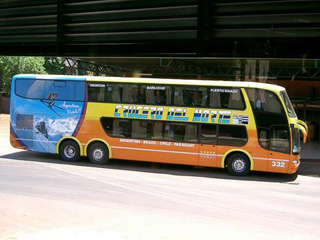
 Buses: We expect to spend a lot of time on both local and long distance buses. In South America, long distance buses are common and come in varying classes. We will try all types and find the right balance of cost and comfort. In other parts of the world, buses are less common, though we'll still use them where possible. Some of the bus lines have websites, some don't. From past travels, it has always been easiest just to buy at the bus station, but we'll let you know if we find otherwise.
Trains: Almost non-existent in South America and Africa, but somewhat common in Asia. We would also like to take the Trans-Siberian Railroad if we have the money left to do so. Booking depends on the train service, but I've always had the most luck finding a travel office at the train station and letting them do the work. It normally costs the same and is significantly easier if you don't speak the language of the country. Local trains are harder to figure out. Asking a local is always easiest.
Boats: Tara and boats don't mix very well, but we'll have to take a few. They are the most common transportation in the rain forests, and a common way to go between some places such as Colombia to Panama. (The overland route is not passable and also inhabited by FARC guerillas.) Most of the rain forests boats are part of pre-arranged tours and the others we'll generally book through travel agents.Rental car: We don't plan to have a car very often, but in certain countries we may explore on our own with a car. Rental cars can be a cheap way to see a lot in a short time. I prefer priceline.com for rental car bookings, but they won't always have international locations.
Tuesday, May 26, 2009
Are You Rich?
Some of our closest friends and family members have ventured to ask outright what most everyone has subtly hinted: "How much is this trip costing you?" Sometimes it is accompanied by comments along the lines of that person not being able to afford a similar trip. Because finding good information about costs for round-the-world trips (often called RTWs) has been so hard to find, we're going to try to share a lot of financial information.
Some of you may not like the occasional focus on money, so feel free to skip them. I will try to contain them all in separate entries tagged "finances". We will try to break down spending by country and share the costs of important excursions where possible. This entry will focus on saving the money in the first place and on our expected budget.
No, we aren't rich, but we have worked hard for the last 8 years to save a reasonable amount of money. I have spent that time working in finance, where I wasn't paid anything like the people you see in the news, but was paid better than most Americans. Tara works in publishing, where she made enough to survive. We're luckier than most in the amount we have made, but anyone can save the money to travel. The key is to be cheap. Call it frugal, thrifty, economical, stingy, penny-pinching, or miserly--they all describe us.
I've spent a lot of time reading the stories of people who travel, and they are almost all the same. It's the little things that add up over time. Take your lunch instead of buying it out every day (or be really cheap like me and don't eat lunch), drink the free office coffee instead of the better Starbucks coffee (better yet, don't drink coffee), drink in people's apartments instead of bars (better yet, don't drink), cook at home instead of going out to eat, buy whatever brand is on sale at the store. You get the idea. Taken as any single event, it seems like it doesn't matter and will only be a couple dollars. Over several years, it amounts to many thousand dollars. Okay, enough with the personal budgeting tips. If you want to talk about it more, I really do love talking about saving money, so get in touch.
So, what does it cost to travel the world? We don't know, but we'll let you know as we find out. Here's what we're thinking at present. I break expenses into four basic categories: 1.) lodging; 2.) food; 3.) transportation; 4.) excursions. What we do know is that expenses will vary a lot from day to day.
Lodging and food are somewhat predictable, though they vary across the world. A good rule of thumb seems to be that lodging for two people and food for two people will cost roughly the same each day if you eat out a fair amount at affordable restaurants and sometimes cook yourself (or make peanut butter and jelly). In South America, we expect lodging and food to cost about $50-60 per day for the two of us. It will probably be less in most of Africa. It will vary a lot in Southeast Asia.
The cost that is hardest to control is transportation. For us, this will primarily be flights and buses. How we are booking flights will be another post, but no matter how you do it, they are likely to cost around $3,000 each over the course of the trip. Maybe more if you fly a lot. We plan to take overland routes wherever possible. If you plan to stay in major cities for a month at a time and just take short day trips, you may find this to be even less. In South America, bus prices differ a lot, but it probably amounts to about $0.20/mile on average. We'll likely travel around 7,000 miles just in South America.
Excursions are the fastest way to blow the budget. These could be anything from a day trip to a waterfall to a week in the Galapagos Islands. They tend to be with small groups and may cost a couple hundred dollars per day per person in some cases. We will try to keep expensive excursions to a minimum, but they are sometimes the only way to get places. We'll let you know what these cost.
To start, we have budgeted about $150/day for the two of us. That amounts to around $75,000 for the 18 months. We hope we can do it cheaper than this, but that's what we're prepared to spend. Feel free to let us know how we can travel cheaper...
Some of you may not like the occasional focus on money, so feel free to skip them. I will try to contain them all in separate entries tagged "finances". We will try to break down spending by country and share the costs of important excursions where possible. This entry will focus on saving the money in the first place and on our expected budget.
No, we aren't rich, but we have worked hard for the last 8 years to save a reasonable amount of money. I have spent that time working in finance, where I wasn't paid anything like the people you see in the news, but was paid better than most Americans. Tara works in publishing, where she made enough to survive. We're luckier than most in the amount we have made, but anyone can save the money to travel. The key is to be cheap. Call it frugal, thrifty, economical, stingy, penny-pinching, or miserly--they all describe us.
I've spent a lot of time reading the stories of people who travel, and they are almost all the same. It's the little things that add up over time. Take your lunch instead of buying it out every day (or be really cheap like me and don't eat lunch), drink the free office coffee instead of the better Starbucks coffee (better yet, don't drink coffee), drink in people's apartments instead of bars (better yet, don't drink), cook at home instead of going out to eat, buy whatever brand is on sale at the store. You get the idea. Taken as any single event, it seems like it doesn't matter and will only be a couple dollars. Over several years, it amounts to many thousand dollars. Okay, enough with the personal budgeting tips. If you want to talk about it more, I really do love talking about saving money, so get in touch.
So, what does it cost to travel the world? We don't know, but we'll let you know as we find out. Here's what we're thinking at present. I break expenses into four basic categories: 1.) lodging; 2.) food; 3.) transportation; 4.) excursions. What we do know is that expenses will vary a lot from day to day.
Lodging and food are somewhat predictable, though they vary across the world. A good rule of thumb seems to be that lodging for two people and food for two people will cost roughly the same each day if you eat out a fair amount at affordable restaurants and sometimes cook yourself (or make peanut butter and jelly). In South America, we expect lodging and food to cost about $50-60 per day for the two of us. It will probably be less in most of Africa. It will vary a lot in Southeast Asia.
The cost that is hardest to control is transportation. For us, this will primarily be flights and buses. How we are booking flights will be another post, but no matter how you do it, they are likely to cost around $3,000 each over the course of the trip. Maybe more if you fly a lot. We plan to take overland routes wherever possible. If you plan to stay in major cities for a month at a time and just take short day trips, you may find this to be even less. In South America, bus prices differ a lot, but it probably amounts to about $0.20/mile on average. We'll likely travel around 7,000 miles just in South America.
Excursions are the fastest way to blow the budget. These could be anything from a day trip to a waterfall to a week in the Galapagos Islands. They tend to be with small groups and may cost a couple hundred dollars per day per person in some cases. We will try to keep expensive excursions to a minimum, but they are sometimes the only way to get places. We'll let you know what these cost.
To start, we have budgeted about $150/day for the two of us. That amounts to around $75,000 for the 18 months. We hope we can do it cheaper than this, but that's what we're prepared to spend. Feel free to let us know how we can travel cheaper...
Tuesday, May 19, 2009
How do you travel?
Today's frequently asked question: "How fast will the two of you travel? Will you stay in a few places or travel all over?" I'll get to the answer later, but you need some background to understand the answer.
One of the most important questions to decide when you are traveling is what kind of traveler you are. Many people haven't actually thought about what kind of travelers they are, and these are the people who end up angry at their traveling partners. It is okay to be any kind of traveler, and best to keep it in mind while planning. I summarize travelers into the following four (symbolic) classes, though some may be between categories on the spectrum: 1.) Beach-goers; 2.) Museum-goers; 3.) Explorers; and 4.) Marathoners. Unless you are incredibly selfless, I suggest not traveling with someone who is more than about half a category in either direction.
Beach-goer: One who prefers to do nothing on vacation. Said nothing may include reading a book, sitting in the sun by the pool, sitting in a cabin, or otherwise relaxing. A nice exotic drink can often be found with the beach-goer, who may not even be on the beach. He or she may occasionally take an outing, but it is more because most people don't like to tell their friends they took a six hour flight to do absolutely nothing than because they actually want to do something. Beach-goers may not make great round-the-world travelers, since it would be cheaper for them just to move to a Caribbean island.
Museum-goer: One who vacations primarily to experience the culture of another place and is content to absorb the surroundings. Museum-goers generally don't go somewhere to sit around doing nothing, but they often prefer to stay in a limited number of places and fully experience them. Museum-goers can travel round-the-world very cheaply if they are willing to stay for extended periods in a limited number of cities with small trips from those bases. This dramatically reduces all costs (talked about in the next post).
Explorer: One who wants to see a lot, but burns out occasionally. They aren't likely to stay in one place for very long, but some part of any vacation needs to be at least a few days in one place and involve relaxation. They may see some cultural institutions, but they also spend a lot of time outdoors, hiking or adventuring. They may also see overland travel as a waste of time and prefer to fly. This is probably the group that includes most round-the-world travelers. See a good amount, but stop and recharge from time-to-time.
Marathoner: One who takes traveling more seriously than any job and feels that the goal of travel is to see everything possible. They will give up sleep, food, or their health to squeeze in that last hike or destination. Two days in one place is an eternity and is reserved for only the best of places. Round-the-world trips have the potential to really overload these people. They also spend more on transportation than any other group.
So, where do Tara and I fall? I'm a marathoner, through and through. Most people who have traveled with me will say that they saw more on a trip with me than they ever thought possible. They will also say that they wanted to kill me for a majority of the trip.
Tara is more of an explorer. She indulges me most of the time, but she likes to take some time to relax on occasion. She doesn't really like climbing mountains just to say you did, and she doesn't really care if we go 6 hours out of the way to see a really big tree.
As we travel around the world, we will mostly be marathoners, with the occasional stop for a few days to keep the peace between us. I may also take some day trips on my own when Tara doesn't want to go someplace. We're also hoping some friends meet us along the way, which would be a good break for everyone.
One of the most important questions to decide when you are traveling is what kind of traveler you are. Many people haven't actually thought about what kind of travelers they are, and these are the people who end up angry at their traveling partners. It is okay to be any kind of traveler, and best to keep it in mind while planning. I summarize travelers into the following four (symbolic) classes, though some may be between categories on the spectrum: 1.) Beach-goers; 2.) Museum-goers; 3.) Explorers; and 4.) Marathoners. Unless you are incredibly selfless, I suggest not traveling with someone who is more than about half a category in either direction.
Beach-goer: One who prefers to do nothing on vacation. Said nothing may include reading a book, sitting in the sun by the pool, sitting in a cabin, or otherwise relaxing. A nice exotic drink can often be found with the beach-goer, who may not even be on the beach. He or she may occasionally take an outing, but it is more because most people don't like to tell their friends they took a six hour flight to do absolutely nothing than because they actually want to do something. Beach-goers may not make great round-the-world travelers, since it would be cheaper for them just to move to a Caribbean island.
Museum-goer: One who vacations primarily to experience the culture of another place and is content to absorb the surroundings. Museum-goers generally don't go somewhere to sit around doing nothing, but they often prefer to stay in a limited number of places and fully experience them. Museum-goers can travel round-the-world very cheaply if they are willing to stay for extended periods in a limited number of cities with small trips from those bases. This dramatically reduces all costs (talked about in the next post).
Explorer: One who wants to see a lot, but burns out occasionally. They aren't likely to stay in one place for very long, but some part of any vacation needs to be at least a few days in one place and involve relaxation. They may see some cultural institutions, but they also spend a lot of time outdoors, hiking or adventuring. They may also see overland travel as a waste of time and prefer to fly. This is probably the group that includes most round-the-world travelers. See a good amount, but stop and recharge from time-to-time.
Marathoner: One who takes traveling more seriously than any job and feels that the goal of travel is to see everything possible. They will give up sleep, food, or their health to squeeze in that last hike or destination. Two days in one place is an eternity and is reserved for only the best of places. Round-the-world trips have the potential to really overload these people. They also spend more on transportation than any other group.
So, where do Tara and I fall? I'm a marathoner, through and through. Most people who have traveled with me will say that they saw more on a trip with me than they ever thought possible. They will also say that they wanted to kill me for a majority of the trip.
Tara is more of an explorer. She indulges me most of the time, but she likes to take some time to relax on occasion. She doesn't really like climbing mountains just to say you did, and she doesn't really care if we go 6 hours out of the way to see a really big tree.
As we travel around the world, we will mostly be marathoners, with the occasional stop for a few days to keep the peace between us. I may also take some day trips on my own when Tara doesn't want to go someplace. We're also hoping some friends meet us along the way, which would be a good break for everyone.
Sunday, May 17, 2009
Why?
Most of my posts between now and when we leave come from questions that we get a lot from friends, family, and strangers when we tell them we are going to sell everything we own and travel. I'll try to post them in a somewhat logical order.
"Why would you want to travel for that long?" Some form of this question is common. We also hear, "What will you do for all that time?" The question reveals a bit about the personality of the asker (and my next post will be about how different people travel), but the question of why seems a good one to ask before taking an extended trip.
For me, two reasons come to mind: 1.) The world is an amazing place, and I learn a lot about people, nature, and myself whenever I travel; and 2.) Why not?
I don't often reflect on why I travel--it just seems so natural to me to go other places. The more places that I go, the more that I learn. It might be how trees grow in a rainforest or it might be how people in Tunisia think about America, but always insightful. And surprisingly useful in everyday life.
The second, more rhetorical reason, comes down to why do people spend their days doing most things. Why eat a particular food? Why work in a particular job? Why marry a certain person? Probably because it makes the person happy or out of necessity. Those are the same reasons I feel compelled to travel.
Tara may have her own reasons. We'll see what she posts. In the meantime, why do you travel?
"Why would you want to travel for that long?" Some form of this question is common. We also hear, "What will you do for all that time?" The question reveals a bit about the personality of the asker (and my next post will be about how different people travel), but the question of why seems a good one to ask before taking an extended trip.
For me, two reasons come to mind: 1.) The world is an amazing place, and I learn a lot about people, nature, and myself whenever I travel; and 2.) Why not?
I don't often reflect on why I travel--it just seems so natural to me to go other places. The more places that I go, the more that I learn. It might be how trees grow in a rainforest or it might be how people in Tunisia think about America, but always insightful. And surprisingly useful in everyday life.
The second, more rhetorical reason, comes down to why do people spend their days doing most things. Why eat a particular food? Why work in a particular job? Why marry a certain person? Probably because it makes the person happy or out of necessity. Those are the same reasons I feel compelled to travel.
Tara may have her own reasons. We'll see what she posts. In the meantime, why do you travel?
Subscribe to:
Posts (Atom)